Music and Texts of GARY BACHLUND Vocal Music | Piano | Organ | Chamber Music | Orchestral | Articles and Commentary | Poems and Stories | Miscellany | FAQs |
Biographical Information
Having retired from performing in public, I spend precious and pleasant hours bathed in the joys of music by composing as by listening and learning from our masters. It has been a privilege and joy to work with so many fine colleagues, performers, conductors, directors and producers, for which I am deeply grateful. |
In a career as opera and concert singer, Bachlund has been a resident of southern California, and, for twenty years, Berlin. He was guest artist at Frankfurt Oper (in Frankfurt and on tour to Israel), Oper Köln (in both Köln and also on tour in Japan), Oper Braunschweig, Pfalztheater, Staatstheater Kassel, Teatro Filharmonico (Arena di Verona), Teatro Regio, Oper Graz and principal guest artist the Metropolitan Opera, since his Carnegie Hall debut in 1986, as well as with Los Angeles Opera, Florentine Opera, Tulsa Opera, Minnesota Opera, Dallas Opera, Arizona Opera, Palm Beach Opera, Hawaii Opera Theater, Washington Opera, Royal Opera (de la Monnaie), Royal Opera (Antwerpen), Royal Opera de Wallonie (Liège), Opera de Paris (Bastille), Opera de Nancy et de Lorraine, Opera de Montpellier, Teatro Real (Madrid), and Teatro Municipal (Santiago), Welsh National Opera, Scottish National Opera, Edmonton Opera, L'Opera de Montreal, and Opera New Zealand.
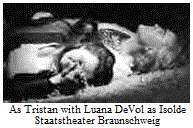
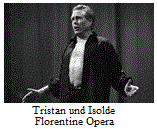
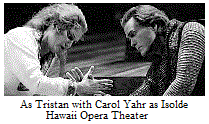
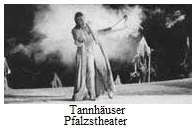
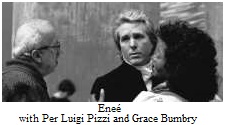
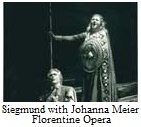
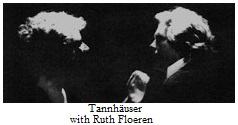
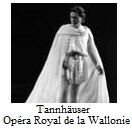
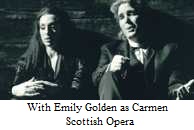
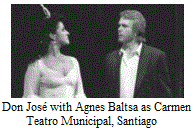
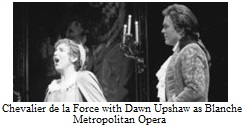
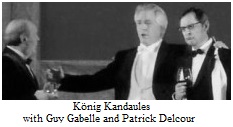
Roles included the title roles of Wagner's Tristan und Isolde, Tannhäuser, and Parsifal, as well as Siegmund (Die Walküre), Erik (Der fliegende Holländer), Loge and Froh (Das Rheingold); Strauss' Bacchus (Ariadne auf Naxos) and Aegisth (Elektra); Florestan (Fidelio), the title role in Der König Kandaules, Don José (Carmen), Enée (Les Troyens), Jimmy (Rise and Fall of the City Mahagonny), Dimitrij (Boris Godunow in the original edition), Le Chevalier de la Force (Dialogues of the Carmelites), Agrippa (The Fiery Angel), Rudolph Valentino (The Dream of Valentino), and Enzo (La Gioconda).
He performed with conductors James Levine, James Conlon, Sir Charles Mackerras, Edo de Waart, Bernhard Kontarsky, Kent Nagano, John Mauceri, Joseph Silverstein, Lawrence Foster, Sylvan Cambreling, Friedrich Pleyer, Christoph Perick, John Cage, Ivan Törzs, Anton Guadagno, Joseph Resigno, Anton Nanut, Marcus Bosch, Enoch zu Gutenberg, Gustav Meier, Lior Shambadal, Zoltan Kocsis, Roberto Paternostro, Carol Crawford, Dean Byron, and Stefan Minde, as well as pops concerts with John Green, Harry Rabinowitz and Lucas Richman. Noted stage directors with whom he worked include Werner Herzog, Michael Hampe, Herbert Wernicke, Jean-Claude Berutti, Birgitte Fassbaender, Jonathon Miller, Götz Friedrich, Michael Leinert, Ulrich Peters, Wolfram Mehring, Juha Hemànus, Rudolf Nolte, Lutz Selig, John Cage, Graham Vick, Giles Havergal, Pier Luigi Pizzi, Peter Mussbach and Henry Akina.
He appeared as soloist with the Chicago Symphony, the Los Angeles Philharmonic at Hollywood Bowl, the American Symphony at Carnegie Hall, Minnesota Orchestra, Utah Symphony, New Jersey Symphony, Opera Orchestre de Lyon, Festival de Radio France, Orchestre de la Monnaie, Tokyo Symphony, Osaka Philharmonic, VARA Radio Symphony at the Concertgebouw, Frankfurt Oper Orchester at the Jerusalem Festival, Kölner Philharmonie, Orchester Stadttheater Aachen, Chorgemeinschaft Neubeuern, Capella Istropolitana, Budapest Spring Festival, Cincinnati May Festival, Monterey Symphony, Carmel Bach Festival, Los Angeles County Art Museum Series (with Leonard Stein), and Orchestre Métropolitain de Montreal.
His vocal study was with Dorothy Fries
at Immaculate Heart College (BA, 1968). Coaching with Jack Metz, Martial Singher (Music Academy of the West) and Walter Taussig (Metropolitan Opera). Vocal awards have included the Debut Award and First Prize from the Young Musicians Foundation, and the Frank Sinatra Auditions First Prize as classical vocalist.
A native of Los Angeles and currently resident of Berlin, Germany, Bachlund also studied composition, theory, aesthetics and music education in parallel with his performing career, served for some years as composer-in-residence at All Saints Church, Pasadena, and created many choral works, almost all with ecumenical themes drawn from biblical sources; he has written liturgical music for the synagogue as well, also serving several synagogues as Cantor.
In the midst of a career as singer travelling internationally, he earned his Masters Degree (1991) and Ph.D. (1993) in composition from the University of California, Los Angeles, composing both poetic texts and the musical setting for an ecumenical Requiem for the Victims of AIDS
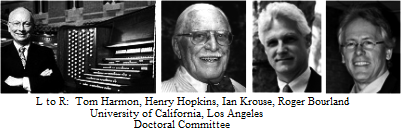
He has written over 1,400 art songs as well as other choral and chamber works. He studied theory and composition privately in Los Angeles with Eugene Zador, as well as with Dorrance Stalvey at Immaculate Heart College and at UCLA with Roger Bourland, Roy Travis, Ian Krouse, and Elaine Barkin, and music education and aesthetics with Abraham Schwadron and Maurice Gerow. Additionally he studied choral conducting with Roger Wagner and orchestral conducting with Mehli Mehta. He has taught at the Musical Theater Workshop of the Los Angeles Civic Light Opera and the American Center for Musical Theater in Los Angeles, as well as master classes as guest faculty internationally. For some reviews, click Press Quotes
Before his work as an opera and concert singer, he has served congregations throughout southern California in several capacities, was in sales and marketing for Hewlett-Packard for almost ten years, was a member of Screen Actors Guild and did recordings for television, was a retail buyer and soldier in the United States Army and California National Guard.